The Superintelligence Podcast
The people building the AI future, unfiltered. New conversations regularly.
Listen on

Robby Stein is VP of Product at Google Search, where he leads AI Overviews, AI Mode, search ranking, and Google Lens. Before Google, he built Stories, Reels, and Close Friends at Instagram – products now used by billions. He also co-founded Stamped (acquired by Yahoo) and led product at Artifact.

Robby Stein is VP of Product at Google Search, where he leads AI Overviews, AI Mode, search ranking, and Google Lens. Before Google, he built Stories, Reels, and Close Friends at Instagram – products now used by billions. He also co-founded Stamped (acquired by Yahoo) and led product at Artifact.

An AI agent can have permission to take every individual step and still produce an outcome the company never intended. How do you keep control once software can choose its own route to a goal?

An AI agent can have permission to take every individual step and still produce an outcome the company never intended. How do you keep control once software can choose its own route to a goal?

Why do so many enterprise AI pilots work in a demo but never become part of everyday business? Christian Monberg, CTO and Head of Product at Zeta Global, joins Kim Isenberg and Peter Thum to explain what gets in the way: fragmented data, isolated tools, and workflows that nobody has redesigned around AI. We discuss Zeta's work with Palantir Foundry, how Athena connects recommendations to data and forecasts, and why agents still need human checkpoints before actions such as large-scale data merges. Chris also explains how he thinks about measuring trust, choosing between open-source and frontier models, and the cost of moving customers onto a new platform. The conversation closes with lessons from building Boomtrain and rebuilding motorcycles: what lasts when the technology around you keeps changing?

Why do so many enterprise AI pilots work in a demo but never become part of everyday business? Christian Monberg, CTO and Head of Product at Zeta Global, joins Kim Isenberg and Peter Thum to explain what gets in the way: fragmented data, isolated tools, and workflows that nobody has redesigned around AI. We discuss Zeta's work with Palantir Foundry, how Athena connects recommendations to data and forecasts, and why agents still need human checkpoints before actions such as large-scale data merges. Chris also explains how he thinks about measuring trust, choosing between open-source and frontier models, and the cost of moving customers onto a new platform. The conversation closes with lessons from building Boomtrain and rebuilding motorcycles: what lasts when the technology around you keeps changing?

Which parts of your job can an AI agent take over, and how do you check its work? At Dreamforce, Mick Costigan, VP of Salesforce Futures, joined Kim Isenberg and Peter Thum for a conversation about AI agents, education and the future of work. Mick explains why training data and the ability to verify an answer matter when deciding what to automate. We also discuss entry-level jobs, human judgment, personal AI assistants and the business models behind them, before turning to Slack and how agents might work across an organization. His predictions for the next two years include changes to jobs and reporting structures, with digital twins helping businesses test decisions before making them.

Which parts of your job can an AI agent take over, and how do you check its work? At Dreamforce, Mick Costigan, VP of Salesforce Futures, joined Kim Isenberg and Peter Thum for a conversation about AI agents, education and the future of work. Mick explains why training data and the ability to verify an answer matter when deciding what to automate. We also discuss entry-level jobs, human judgment, personal AI assistants and the business models behind them, before turning to Slack and how agents might work across an organization. His predictions for the next two years include changes to jobs and reporting structures, with digital twins helping businesses test decisions before making them.

What does it take to put a robot to work on the outside of a skyscraper? Ido Genosar, co-founder and CEO of Verobotics, joins Kim Isenberg and Peter Thum to talk about robots that clean and inspect building facades, the economics of working at height, and what it takes to turn a pilot into a service customers will pay for. We get into the details that rarely make it into a robotics demo: changing light, different building surfaces, deployment crews, and proving which parts of a facade have actually been covered. Ido also explains what the robots collect as they work, why field experience is hard to copy, and why a robot doing this job doesn't need to look like a person.

What does it take to put a robot to work on the outside of a skyscraper? Ido Genosar, co-founder and CEO of Verobotics, joins Kim Isenberg and Peter Thum to talk about robots that clean and inspect building facades, the economics of working at height, and what it takes to turn a pilot into a service customers will pay for. We get into the details that rarely make it into a robotics demo: changing light, different building surfaces, deployment crews, and proving which parts of a facade have actually been covered. Ido also explains what the robots collect as they work, why field experience is hard to copy, and why a robot doing this job doesn't need to look like a person.

Kim Isenberg and Peter Thum sit down with Hume AI’s Andrew Ettinger and Olya Ossipova to explore voice AI, emotion, and the challenge of measuring how well a model listens. The conversation focuses on the information a transcript can miss: tone, hesitation, urgency, and the context behind someone’s words. We look at Hume’s VoiceEQ benchmark and Kairos evaluation platform, where human judgment remains essential, and how companies can evaluate voice models for the situations their customers actually encounter.

Kim Isenberg and Peter Thum sit down with Hume AI’s Andrew Ettinger and Olya Ossipova to explore voice AI, emotion, and the challenge of measuring how well a model listens. The conversation focuses on the information a transcript can miss: tone, hesitation, urgency, and the context behind someone’s words. We look at Hume’s VoiceEQ benchmark and Kairos evaluation platform, where human judgment remains essential, and how companies can evaluate voice models for the situations their customers actually encounter.

Google VP of Engineering Dr. Wieland Holfelder joins Kim Isenberg on The Superintelligence Podcast to discuss sovereign AI in Europe and security when AI agents can act inside organizations. Holfelder, who leads Google’s Engineering Center in Munich, discusses the questions businesses face as AI moves from answering prompts to taking action.
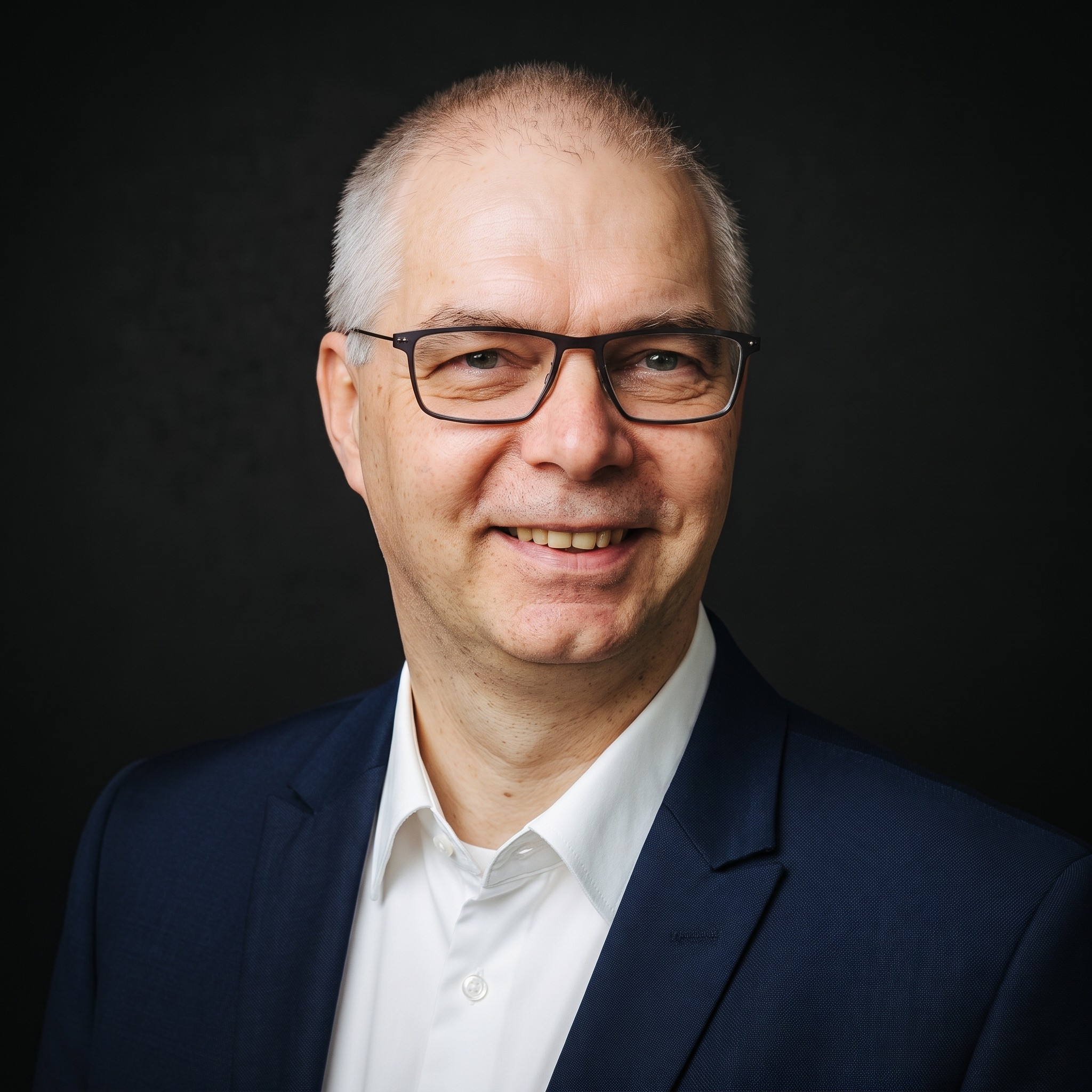
Google VP of Engineering Dr. Wieland Holfelder joins Kim Isenberg on The Superintelligence Podcast to discuss sovereign AI in Europe and security when AI agents can act inside organizations. Holfelder, who leads Google’s Engineering Center in Munich, discusses the questions businesses face as AI moves from answering prompts to taking action.

Can an AI video model understand physics, or does it just produce convincing images? LTX co-founder and CTO Yaron Inger joins Kim Isenberg and Peter Thum on The Superintelligence Podcast to discuss LTX-2.5. They examine multi-shot consistency, the model’s failures, the limits of speed benchmarks and what creators can run on affordable hardware. The conversation also covers open weights, enterprise customers and possible uses in filmmaking, simulation and robotics.

Can an AI video model understand physics, or does it just produce convincing images? LTX co-founder and CTO Yaron Inger joins Kim Isenberg and Peter Thum on The Superintelligence Podcast to discuss LTX-2.5. They examine multi-shot consistency, the model’s failures, the limits of speed benchmarks and what creators can run on affordable hardware. The conversation also covers open weights, enterprise customers and possible uses in filmmaking, simulation and robotics.

How do you choose an AI model for a product people rely on? DataCamp co-founder and CEO Jonathan Cornelissen and Chief AI Officer Yusuf Saber join Kim Isenberg and Peter Thum on The Superintelligence Podcast to discuss AI in education. They compare open-source models with proprietary frontier systems, explain how DataCamp evaluates its AI Tutor, and discuss reliability, cost and personalized learning. Yusuf shares lessons from building Optima, the learning platform acquired by DataCamp.

How do you choose an AI model for a product people rely on? DataCamp co-founder and CEO Jonathan Cornelissen and Chief AI Officer Yusuf Saber join Kim Isenberg and Peter Thum on The Superintelligence Podcast to discuss AI in education. They compare open-source models with proprietary frontier systems, explain how DataCamp evaluates its AI Tutor, and discuss reliability, cost and personalized learning. Yusuf shares lessons from building Optima, the learning platform acquired by DataCamp.

Does running an American AI model in a European data center make it sovereign? PandaOS co-founders Philipp Türker and Marco Szeidenleder join Kim Isenberg and Peter Thum on The Superintelligence Podcast to discuss who controls the models, data and infrastructure. They explain how local inference, self-hosting and the ability to switch providers can give users more control. The conversation also covers smaller specialized models, Europe’s AI ecosystem, the AI Act and PandaOS’s approach to a local AI workspace.

Does running an American AI model in a European data center make it sovereign? PandaOS co-founders Philipp Türker and Marco Szeidenleder join Kim Isenberg and Peter Thum on The Superintelligence Podcast to discuss who controls the models, data and infrastructure. They explain how local inference, self-hosting and the ability to switch providers can give users more control. The conversation also covers smaller specialized models, Europe’s AI ecosystem, the AI Act and PandaOS’s approach to a local AI workspace.

When AI systems use web content without sending readers back, how do publishers get paid? Cloudflare Chief Strategy Officer Stephanie Cohen joins Kim Isenberg on The Superintelligence Podcast to discuss the company’s approach. They examine Pay Per Crawl and Pay Per Use, controls for AI bots, and the differences between search, training and agent traffic. The conversation asks whether smaller publishers can benefit, what happens as AI answers replace clicks, and how much power Cloudflare should have over access to the web.

When AI systems use web content without sending readers back, how do publishers get paid? Cloudflare Chief Strategy Officer Stephanie Cohen joins Kim Isenberg on The Superintelligence Podcast to discuss the company’s approach. They examine Pay Per Crawl and Pay Per Use, controls for AI bots, and the differences between search, training and agent traffic. The conversation asks whether smaller publishers can benefit, what happens as AI answers replace clicks, and how much power Cloudflare should have over access to the web.

Who decides what an AI agent is allowed to do? Arcade co-founder and CEO Alex Salazar, formerly VP of Product at Okta, joins Kim Isenberg and Peter Thum on The Superintelligence Podcast to discuss agents in enterprise software. They examine authentication, permissions, governance and the Model Context Protocol (MCP), along with the risks of unrestricted access. Alex also discusses deployment lessons, human–agent collaboration and what is still needed for agents to operate safely in production.

Who decides what an AI agent is allowed to do? Arcade co-founder and CEO Alex Salazar, formerly VP of Product at Okta, joins Kim Isenberg and Peter Thum on The Superintelligence Podcast to discuss agents in enterprise software. They examine authentication, permissions, governance and the Model Context Protocol (MCP), along with the risks of unrestricted access. Alex also discusses deployment lessons, human–agent collaboration and what is still needed for agents to operate safely in production.

More GPUs do not solve every AI infrastructure problem. Sven Breuner from VAST Data joins Kim Isenberg on The Superintelligence Podcast to explain why storage, metadata and networking can leave expensive chips waiting for data. They discuss how AI training and inference differ from traditional high-performance computing, what VAST means by an “AI Operating System,” and what enterprises need to consider when building larger AI systems.

More GPUs do not solve every AI infrastructure problem. Sven Breuner from VAST Data joins Kim Isenberg on The Superintelligence Podcast to explain why storage, metadata and networking can leave expensive chips waiting for data. They discuss how AI training and inference differ from traditional high-performance computing, what VAST means by an “AI Operating System,” and what enterprises need to consider when building larger AI systems.

What role do GPUs and AI play in quantum computing? Sam Stanwyck, who leads NVIDIA’s quantum computing product team, joins Kim Isenberg at ISC for The Superintelligence Podcast. They discuss CUDA-Q, simulation, control, error correction and systems that combine classical and quantum processors. Sam explains NVIDIA’s focus on the infrastructure around quantum computers and considers where useful applications in chemistry, materials and scientific research might emerge.

What role do GPUs and AI play in quantum computing? Sam Stanwyck, who leads NVIDIA’s quantum computing product team, joins Kim Isenberg at ISC for The Superintelligence Podcast. They discuss CUDA-Q, simulation, control, error correction and systems that combine classical and quantum processors. Sam explains NVIDIA’s focus on the infrastructure around quantum computers and considers where useful applications in chemistry, materials and scientific research might emerge.

Notion co-founder Akshay Kothari joins Kim Isenberg and Peter Thum on The Superintelligence Podcast to discuss how people, code and AI agents could work together in the same workspace. They explore Notion’s template ecosystem, Notion Workers, internal agents such as “Smilers,” and the choice between different AI models. Akshay discusses automating routine work while retaining human judgment, maintaining useful knowledge bases and sharing specialized agents across an organization.

Notion co-founder Akshay Kothari joins Kim Isenberg and Peter Thum on The Superintelligence Podcast to discuss how people, code and AI agents could work together in the same workspace. They explore Notion’s template ecosystem, Notion Workers, internal agents such as “Smilers,” and the choice between different AI models. Akshay discusses automating routine work while retaining human judgment, maintaining useful knowledge bases and sharing specialized agents across an organization.

Google DeepMind’s Omar Sanseviero and Paige Bailey join Kim Isenberg at Google I/O for The Superintelligence Podcast to discuss open models and AI that runs locally. They examine the role of developer communities, how model releases translate into real products, and how competition from China is influencing the wider AI ecosystem. The conversation considers the choices developers face between local inference, open models and closed systems.

Google DeepMind’s Omar Sanseviero and Paige Bailey join Kim Isenberg at Google I/O for The Superintelligence Podcast to discuss open models and AI that runs locally. They examine the role of developer communities, how model releases translate into real products, and how competition from China is influencing the wider AI ecosystem. The conversation considers the choices developers face between local inference, open models and closed systems.
Zeev Farbman, CEO and co-founder of Lightricks/LTX, joins Kim Isenberg on The Superintelligence Podcast to discuss open AI video models and creative workflows that run locally. He explains LTX’s focus on open weights, efficient models and NVIDIA GPUs, and discusses the trade-offs of closed APIs. They also examine Lightricks’ restructuring, competition with Big Tech and Farbman’s longer-term vision for AI models as an alternative to traditional rendering engines.

Zeev Farbman, CEO and co-founder of Lightricks/LTX, joins Kim Isenberg on The Superintelligence Podcast to discuss open AI video models and creative workflows that run locally. He explains LTX’s focus on open weights, efficient models and NVIDIA GPUs, and discusses the trade-offs of closed APIs. They also examine Lightricks’ restructuring, competition with Big Tech and Farbman’s longer-term vision for AI models as an alternative to traditional rendering engines.

SkipUp co-founders Dheer and Sasha join Kim Isenberg on The Superintelligence Podcast to discuss the work behind booking a meeting and their approach to an AI scheduling agent. They explain how the agent operates inside email threads, proposes times across calendars and time zones, follows up and books meetings. The conversation compares this approach with booking-link tools, explores the business cost of missed meetings and covers how a small team built the product.

SkipUp co-founders Dheer and Sasha join Kim Isenberg on The Superintelligence Podcast to discuss the work behind booking a meeting and their approach to an AI scheduling agent. They explain how the agent operates inside email threads, proposes times across calendars and time zones, follows up and books meetings. The conversation compares this approach with booking-link tools, explores the business cost of missed meetings and covers how a small team built the product.

How can quantitative AI models help researchers study molecules and materials? Nadia Harhen, General Manager of AI Simulation at SandboxAQ, joins Kim Isenberg on The Superintelligence Podcast. She explains Large Quantitative Models (LQMs), how they differ from language models, and their potential applications in drug discovery, battery chemistry and materials research. They also discuss the limits of AI in drug development, SandboxAQ’s work with Aramco and Harhen’s path from laboratory science to AI simulation.

How can quantitative AI models help researchers study molecules and materials? Nadia Harhen, General Manager of AI Simulation at SandboxAQ, joins Kim Isenberg on The Superintelligence Podcast. She explains Large Quantitative Models (LQMs), how they differ from language models, and their potential applications in drug discovery, battery chemistry and materials research. They also discuss the limits of AI in drug development, SandboxAQ’s work with Aramco and Harhen’s path from laboratory science to AI simulation.
NVIDIA’s Kari Briski joins Kim Isenberg at GTC 2026 on The Superintelligence Podcast to discuss Nemotron 3 Super and NVIDIA’s approach to enterprise AI. They examine the model’s hybrid Mamba-2, Transformer and mixture-of-experts architecture, its long context window and the released training recipe. Kari also discusses the Nemotron Coalition and the direction of NVIDIA’s open-model ecosystem.

NVIDIA’s Kari Briski joins Kim Isenberg at GTC 2026 on The Superintelligence Podcast to discuss Nemotron 3 Super and NVIDIA’s approach to enterprise AI. They examine the model’s hybrid Mamba-2, Transformer and mixture-of-experts architecture, its long context window and the released training recipe. Kari also discusses the Nemotron Coalition and the direction of NVIDIA’s open-model ecosystem.
Interested in a partnership?