The Superintelligence Podcast
The robot that climbs skyscrapers

Ido Genosar
Co-founder and CEO, Verobotics

“The hardest thing to copy is not one component. It is the entire field and the operation system.”
In this conversation
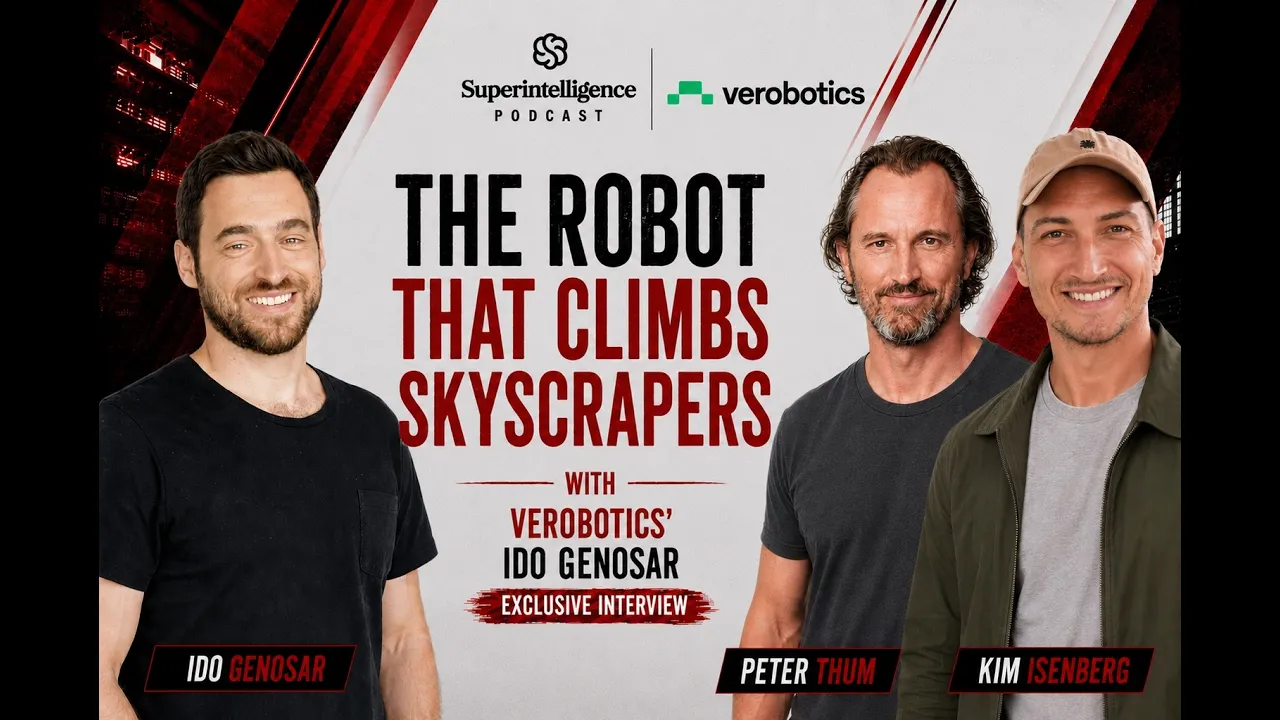
What does it take to put a robot to work on the outside of a skyscraper? Ido Genosar, co-founder and CEO of Verobotics, joins Kim Isenberg and Peter Thum on The Superintelligence Podcast to talk about robots that clean and inspect facades and how a pilot becomes a paid service. Genosar, whose family has been in the facade business for 40 years, argues that the problem was never the worker in the basket of a building maintenance unit but the access itself. He explains why glass, glare and shifting shadows make vision hard, and why the team wrote its own operational playbook after working on more than 100 rooftops. Where a large US cleaning company told him it knows a job went well when it gets paid, Verobotics produces an auditable coverage record and a visual map of the facade. Genosar sees cleaning as the wedge and inspection as the longer-term business, and has little patience for robot boxing demos.
Key takeaways
Verobotics has cleaned and inspected more than five million square feet of facade in the last 12 months.
The goal is for each robot to reach 10,000 square feet per day, a level it has not reached yet. A three-person crew working from a building maintenance unit reaches around 8,000 square feet, Genosar says.
Through facility manager CBRE, Verobotics has a three-year contract for facade cleaning and inspection at an NVIDIA campus.
In Israel, its most active market, Verobotics no longer runs pilots. All projects are paid, with contracts of two to three years.
A robot working on a building exterior does not need to look like a person, Genosar argues. It needs to do a specific, repetitive, dangerous and expensive job.
More interviews
The daily AI briefing people actually read.
What shipped, who’s winning, and what it means. Six days a week, in under ten minutes.
Interested in a partnership?