The Superintelligence Podcast
How NVIDIA is building the future of quantum computing

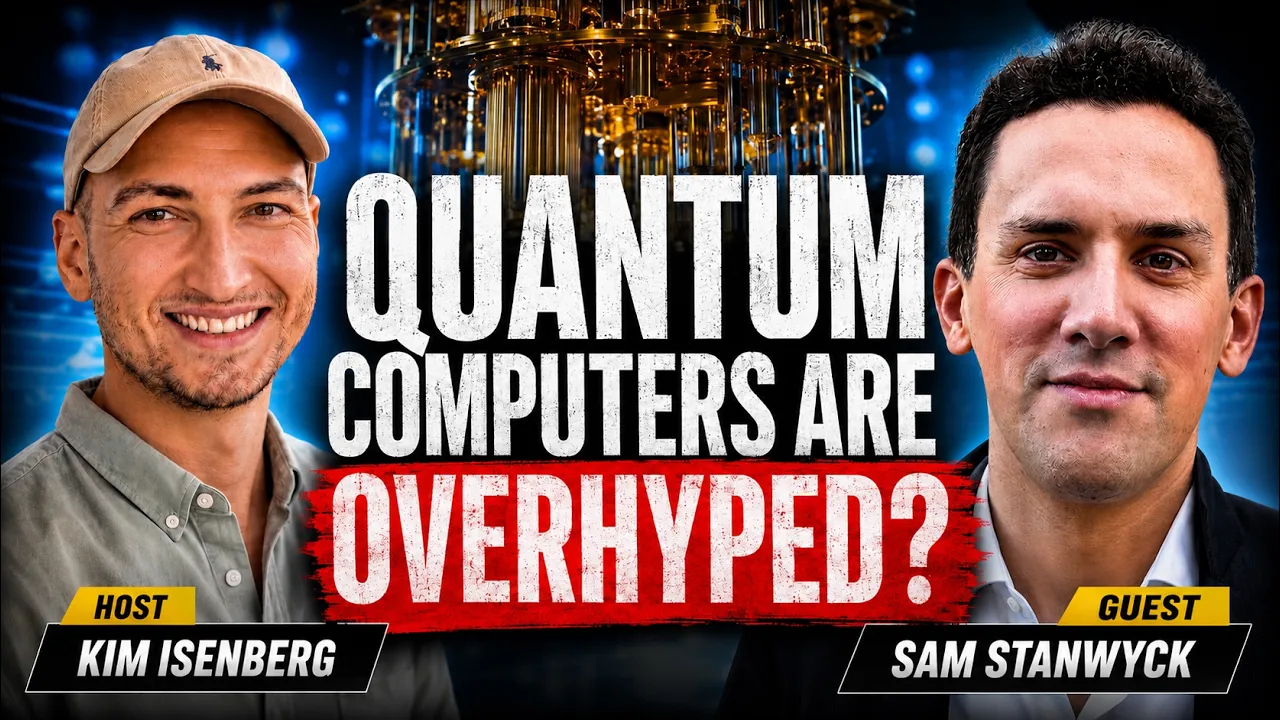
Sam Stanwyck
Quantum computing product lead, NVIDIA

“Quantum computing is gonna be a part of supercomputing. Eventually it’s gonna be a new accelerator.”
In this conversation
NVIDIA does not build its own quantum computer, so what role do its GPUs, AI models and software play in making quantum computing useful? Sam Stanwyck, who leads NVIDIA’s quantum computing product team, joins Kim Isenberg on The Superintelligence Podcast at ISC in Hamburg. Stanwyck, who previously worked at Rigetti and Keysight, compares quantum today to GPU computing twenty years ago: a new accelerator that will complement CPUs and GPUs rather than replace them and needs its own programming model, CUDA-Q. They discuss AI for quantum, from designing a million-qubit chip to calibrating it and correcting its errors, and quantum for AI, such as training AI on data from the world of electrons, photons and atoms. Stanwyck describes NVIDIA’s planned quantum research center in Boston, separates hype from genuine excitement, and expects attention to shift from hardware details to applications in chemistry, materials and drug discovery.
Key takeaways
NVIDIA does not build its own quantum computer. It works with over 300 partners, including 48 of the 50 largest quantum startups.
CUDA-Q, NVIDIA’s programming model for quantum computing, is open source and hardware agnostic.
NVIDIA has released open AI models for two core problems: quantum error correction and the calibration of quantum computers.
Quantum computing reached an inflection point in the last year with the transition from physical to logical qubits, Stanwyck says.
Ten years ago, quantum computing meant one or two qubits in academic labs. Today, hundred-qubit systems with 10 to the minus three error rates are available in the cloud.
More interviews
The daily AI briefing people actually read.
What shipped, who’s winning, and what it means. Six days a week, in under ten minutes.
Interested in a partnership?