The Superintelligence Podcast
How NVIDIA makes AI infrastructure more productive

Shruti Koparkar
Senior Manager, Product and Go-to-Market, NVIDIA

“Ultimately, power is an inescapable constraint. You cannot cheat power.”
In this conversation
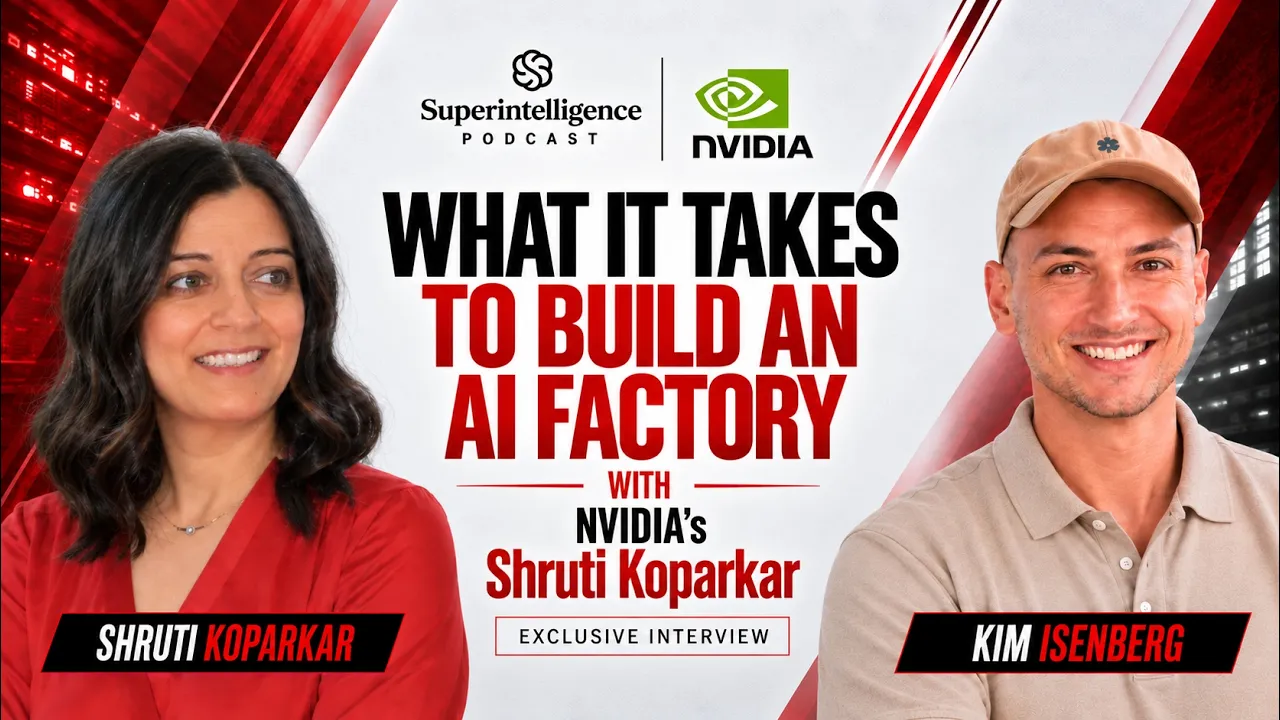
What makes an AI factory a good investment when each megawatt of capacity costs roughly $60 million? NVIDIA’s Shruti Koparkar joins Superintelligence Editor-in-Chief Kim Isenberg to discuss how operators get more out of their GPUs. Koparkar explains why she would test throughput per megawatt before anything else: power is the one constraint no operator can escape, and it caps revenue. With demand outstripping supply, she argues, waiting for the next GPU generation costs more than deploying now. She describes how CUDA libraries refined long before large language models now carry modern AI, and how Pinterest moved from recommender models to language and vision language models on the same GPU fleet, changing mainly its serving layer. The conversation also covers what day-zero support for a new model guarantees and what is tuned afterwards, why AWS could still raise prices on six-year-old GPU instances, and why Koparkar wants the industry to rally around security for AI agents.
Key takeaways
AI factories are built by the megawatt, and each megawatt costs roughly $60 million, Koparkar says.
The first thing she would test on any system is throughput per megawatt, because power sets the ceiling on an operator’s revenue.
Pinterest runs recommender, large language and vision language models on the same NVIDIA fleet of about 14,000 GPUs, spanning Blackwell, Hopper and earlier architectures.
Older GPUs still earn money: AWS raised capacity block pricing for Blackwell, Hopper and Ampere instances, even though Ampere is now six years old.
Software support is rarely the limiting factor for older GPUs because CUDA runs across generations. The next issue she wants the industry to rally around is security for AI agents.
More interviews
The daily AI briefing people actually read.
What shipped, who’s winning, and what it means. Six days a week, in under ten minutes.
Interested in a partnership?