The Superintelligence Podcast
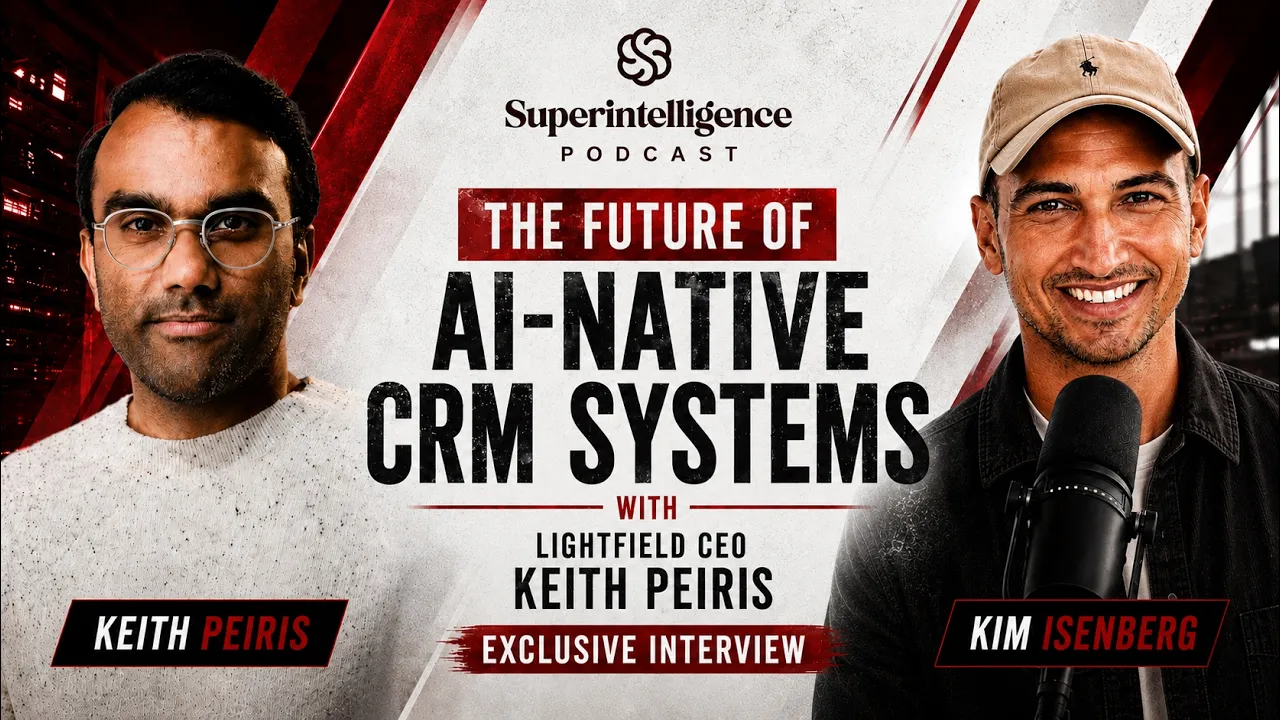
The future of AI-native CRM

Keith Peiris
CEO, Lightfield

“Models need a cohesive story to understand context, and it turns out the best narrative structure for that is time.”
In this conversation
Why do people dislike CRM software, and what would a CRM built for AI look like? Keith Peiris, co-founder and CEO of Lightfield, joins Superintelligence Editor-in-Chief Kim Isenberg to discuss AI-native CRM. Peiris explains how building the AI presentation tool Tome led to the idea: when companies connected their Salesforce data, call recorders and support tickets, the data lacked the context a model needs to understand why things happen. He argues that legacy CRMs grew out of digitized index cards that people update mainly so management can track metrics, and that time is the best structure for giving a model context, so Lightfield keeps a chronological timeline for each customer. He also explains how language models make it possible to migrate CRM data and workflows in a day. The conversation also covers a 200-person company that switched despite missing features, and a five-person team building agricultural software for Canadian farmers that asks its CRM what its marketing should say.
Key takeaways
Lightfield grew out of Tome, the team’s earlier AI presentations product. It gained millions of users but could not generate the high-quality presentations people wanted for work, Peiris says.
People hate legacy CRMs because they were asked to update them by hand so management could track metrics, not to serve customers better, Peiris says.
LLMs now handle data migration in the background, Peiris says, so switching CRMs can take a day instead of months of manual mapping.
Lightfield’s approach is semi-structured: a world model of core objects such as businesses and customers, each with a chronological timeline of everything that happens to them.
Traction became clear when a 200-person company migrated to Lightfield, Peiris says.
More interviews
The daily AI briefing people actually read.
What shipped, who’s winning, and what it means. Six days a week, in under ten minutes.
Interested in a partnership?